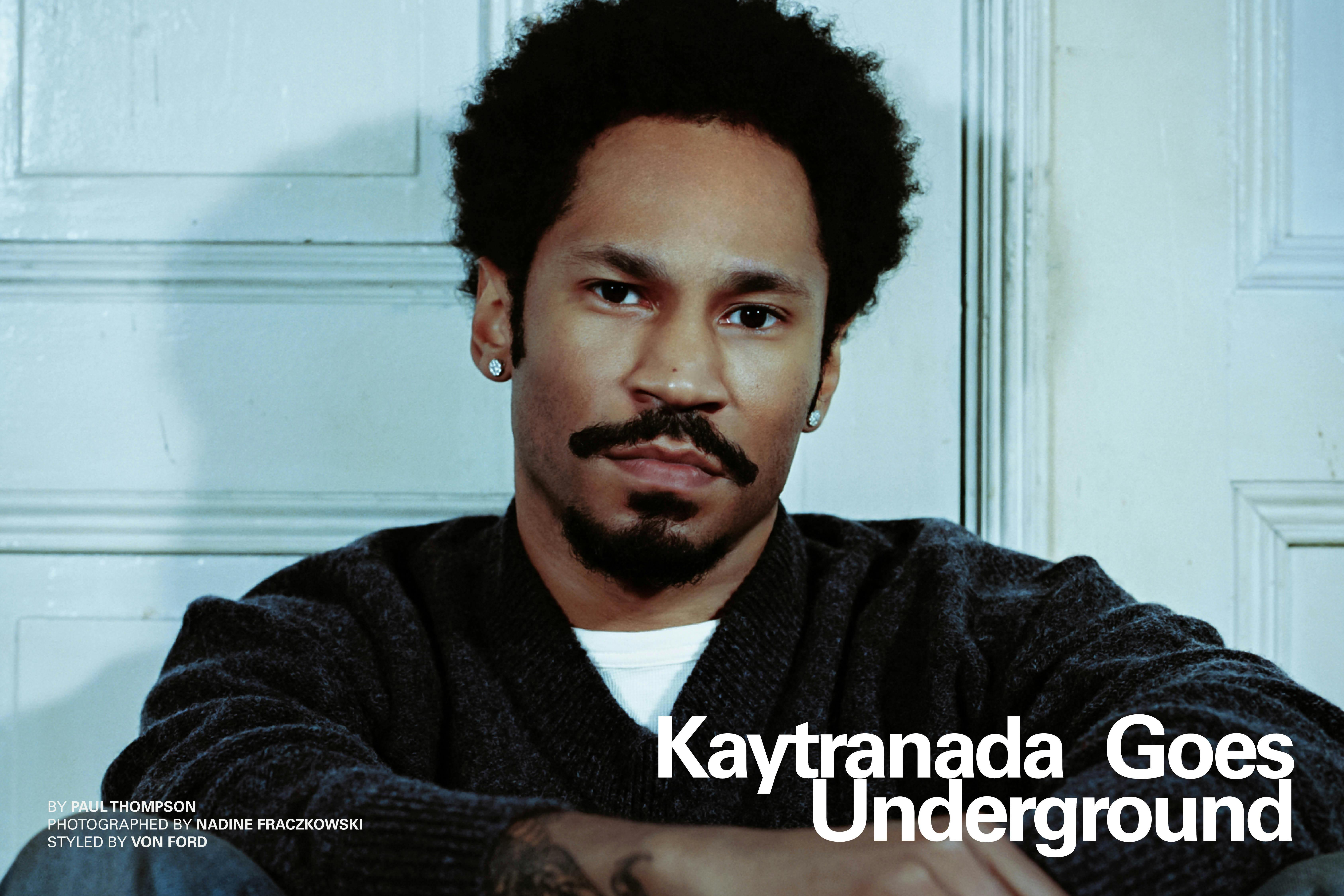
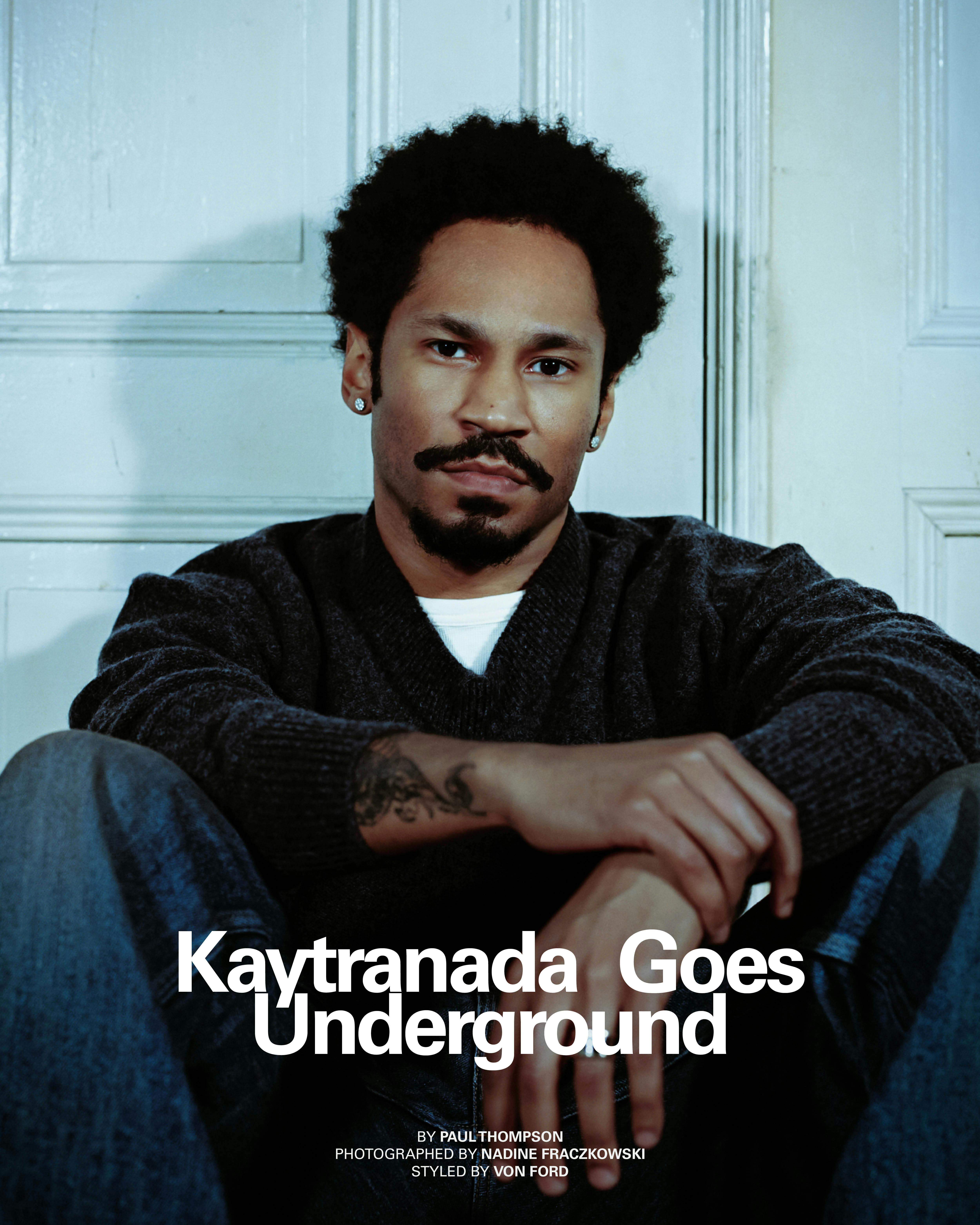
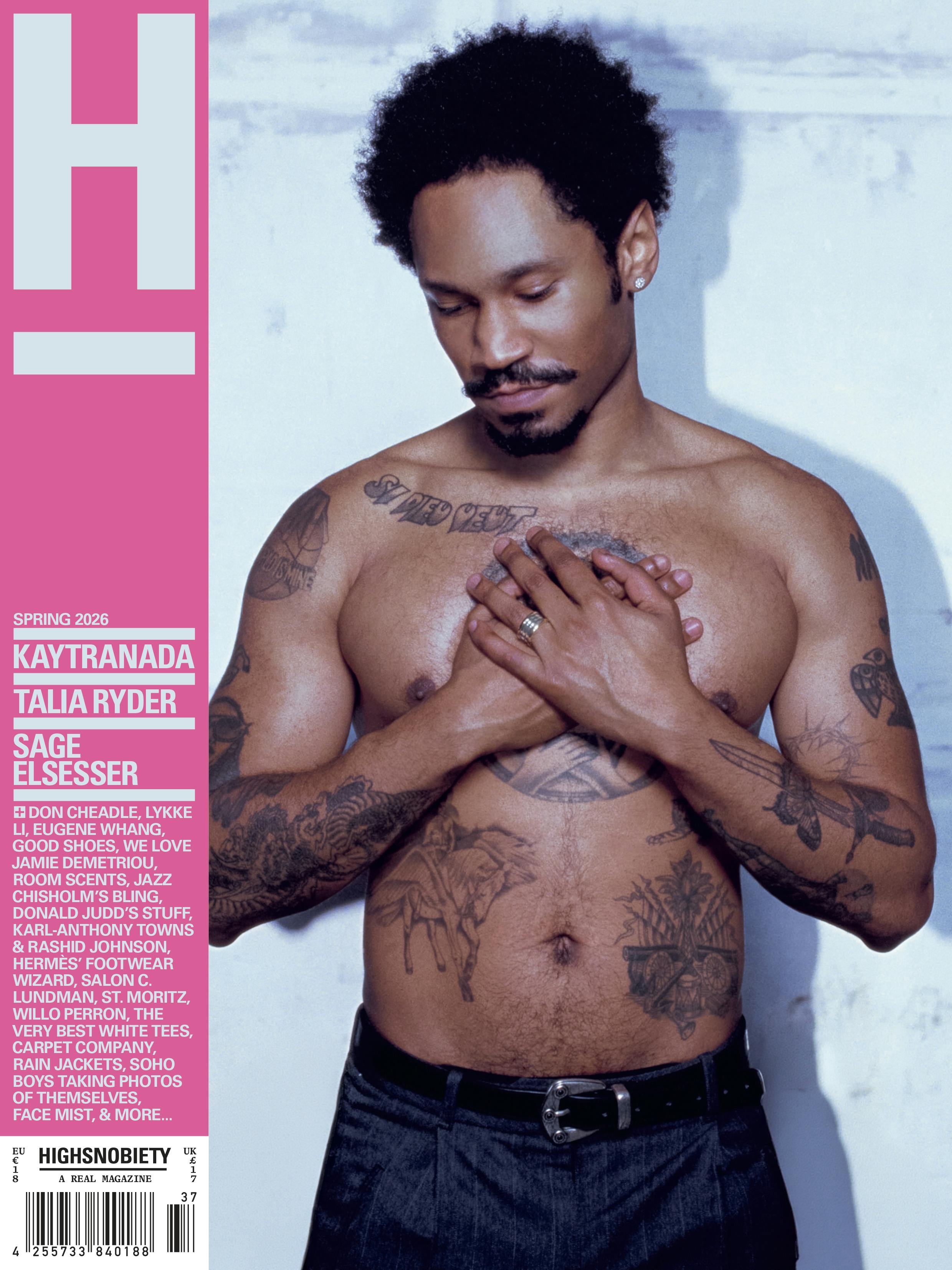
This story appears on the cover of the spring 2026 issue of Highsnobiety. Head here to get a copy.
For the moment, Kaytranada lives in a rented Hollywood Hills home which, by the neighborhood’s standards, is modest and tastefully decorated. It’s sort of like a sane person’s idea of having money: a deep pool, warm tones, enough furniture that you can tell there are humans around.
This isn’t the first place the Haitian-Canadian superstar has rented in Los Angeles, and it won’t be the last. “The curfews were terrible in Quebec,” he says, lounging on the couch where he now makes a lot of his beats, remembering the early COVID lockdowns that inspired his move. “I was like, ‘Lemme get the fuck out of here.’” But right now — as he bides his time before another tour, another album cycle — it’s as good a place as any to hide.
Kaytra, who was born Louis Kevin Celestin 33 years ago in Port-au-Prince and grew up in Montreal, moved to LA right as the world was slowing down and his life was speeding up. His second album, the lush, propulsive Bubba, released at the tail end of 2019, netted him a pair of Grammys (for Best Dance/Electronic Album and Best Dance Recording, the latter for the Kali Uchis–assisted “10%”). The record industry that had once seemed so distant was clamoring for more of his time, more of his attention, more of him. Still, the journey west was less part of a master plan than it was a fit of restlessness.
Pants OUR LEGACY Belt MOLEBO Ring (ring finger) BVLGARI
The impulse to flee must have been strong, because in person, Kaytranada does not read as antsy or nervous. He’s slight and reserved but poised: He will stand stock-still and explain why The Infamous might be the best rap album ever made. The house where he lives is free of clutter but full of equipment: on a kitchen island, a coffee table, wherever there’s space. It gives the impression of someone who, on one day, might immerse himself so fully in work as to forget anything else exists — and on the next, might simply tweak drum sequencing on the way back from grabbing a glass of water.
This half-decade in America has seen Kaytra become bigger — in terms of sheer commercial leverage and the expansiveness of his influence — than anyone could have reasonably expected for a shy kid obsessed with pushing the limits of rhythm in FL Studio. Kaytranada seems to agree. “You could do this, you could do that so you can become bigger,” he says, ventriloquizing the people who pull him into meetings and point to spreadsheets, slideshows, and marketing decks. “And I’m like, ‘I’m fine.’”
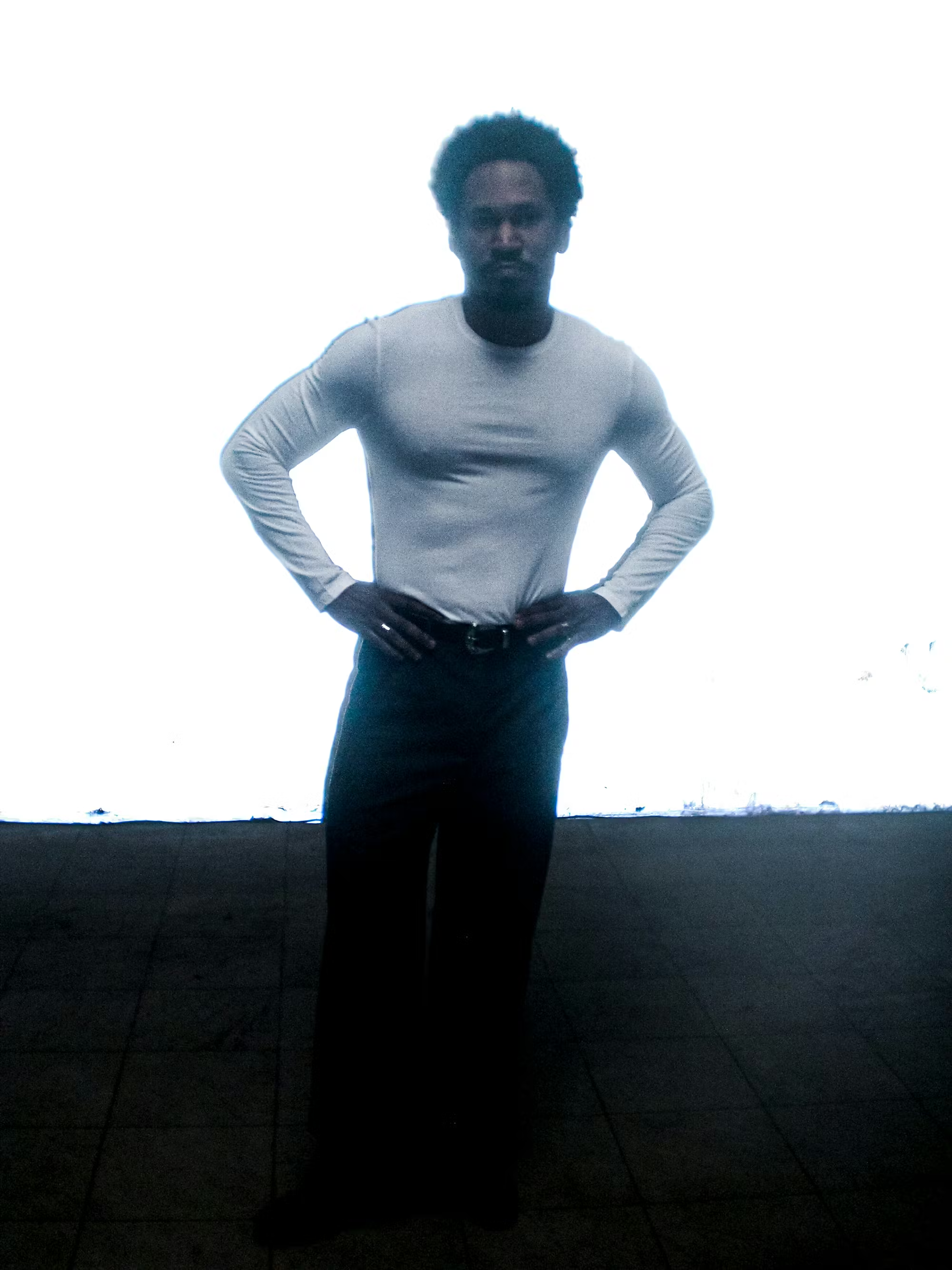
Top STYLIST OWN Ear Rings KAYTRANADA’S OWN Pants OUR LEGACY Rings BVLGARI Belt MOLEBO Shoes JIL SANDER
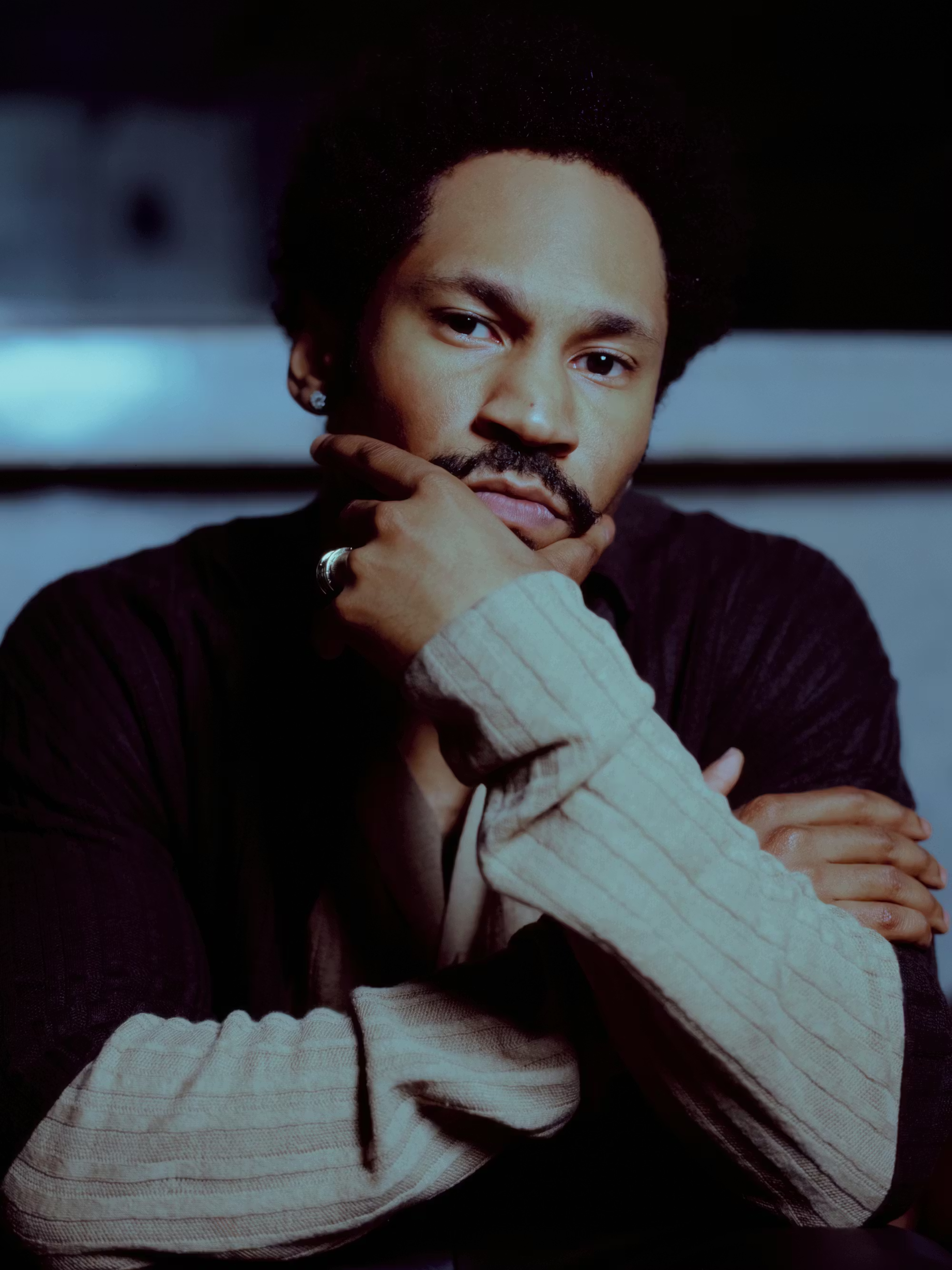
Top and sweater HERMÈS Ring BVLGARI
So today, in midwinter, exactly halfway between the release of his fourth solo album, Ain’t No Damn Way!, and a summer tour in Europe, Kaytranada is burrowing back underground. It’s the opposite of the trajectory followed by virtually every popular artist. But it’s what Kaytranada believes he needs to do to stay tapped in with what made him fall in love with music in the first place. He says he’s been telling people this next album will be the “last serious one” before a flood of more idiosyncratic projects: “Mixtapes, beat tapes, EPs.”
He concedes that he’s said that before, only to go back on the decision. But dating back at least to the press cycle around 2024’s Timeless, Kaytranada has seemed exhausted with the overdetermination of modern blockbuster rollouts. “Prince would just put out an album every year,” he says, leaning forward for emphasis. “Madlib would put out projects whenever he wants.” The artists he admires from the past weren’t so precious, basically. “For me,” an album should be “just a document of what you went through — you look back at it and you’re like, ‘Okay, that’s how I felt.’”
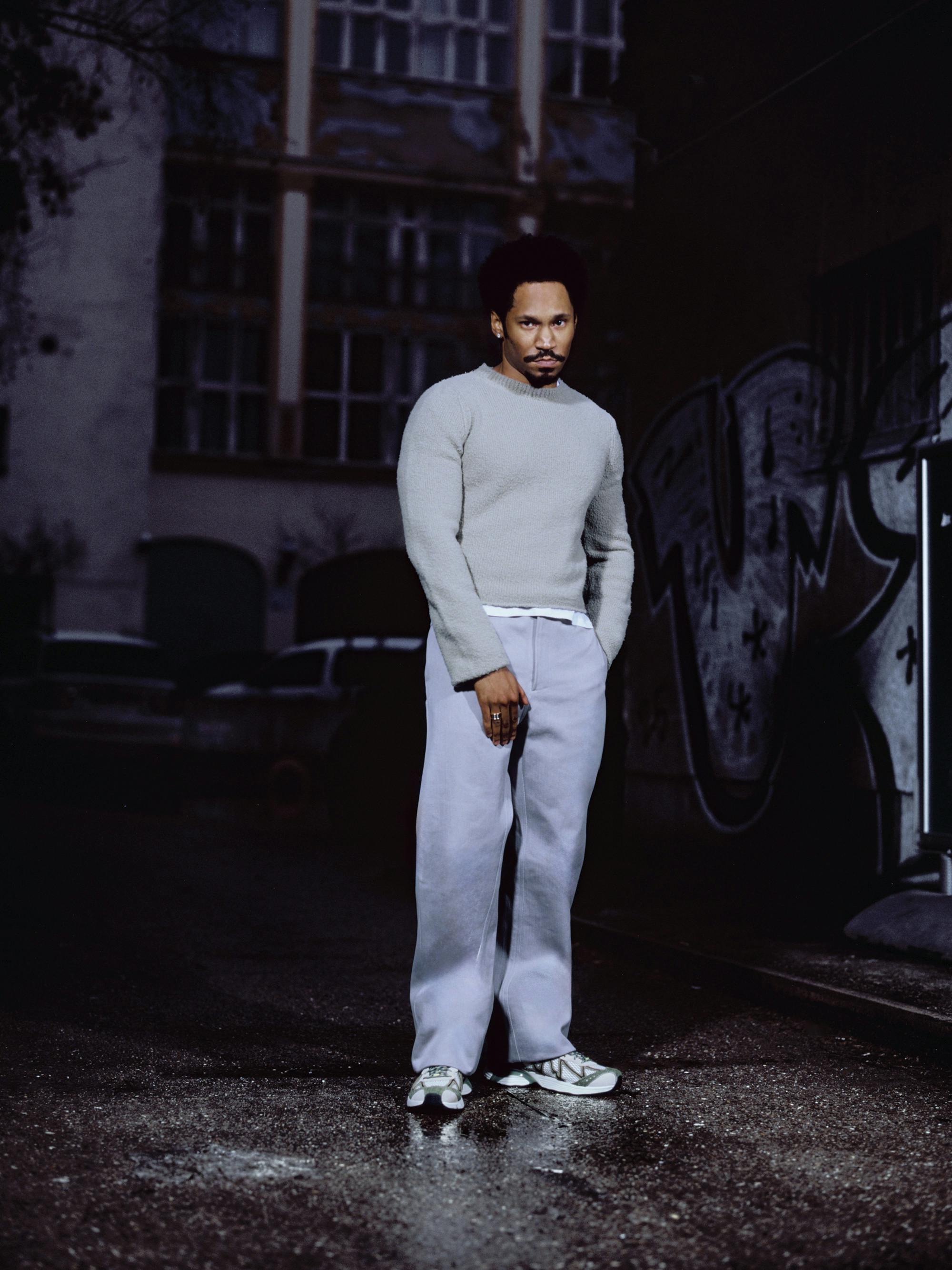
Top and pants RIER Shoes SALOMON Ring BVLGARI
The retreat is nothing new; relative isolation is Kaytranada’s natural state. Where hip-hop was once a strictly social endeavor, his earliest forays into the genre were online. When he was 15, he fell in with about a dozen other aspiring producers who would upload their beats to YouTube. “We were the only ones watching,” he jokes, “giving each other props.” Spurred on by the tantalizing amount of music one could torrent — and by a particularly gifted 13-year-old of whom all the others were jealous — Kaytranada threw himself into the depths of The Pirate Bay, combing through old German prog-rock LPs, obscure disco, new wave, library music, anything with a synthesizer. He was modeling himself, as both a producer and crate-digger, after Madlib and J. Dilla, prizing the inscrutability of source material.
By the time he released his debut album, the thunderous-yet-shimmering 99.9%, in 2016, he had already blown up online with a Janet Jackson remix, opened for Madonna, and signed to XL. Just as tellingly, he’d seen his style widely imitated, but never truly replicated: legions of producers across genres pushing drums forward, trying to blend soul, funk, and R&B with myriad dance genres, yet never quite matching the Kaytranada atmosphere, one that’s both totalized and totalizing.
Rap was always the organizing principle. No matter what other influences come flooding in — new jack swing, classic boogie, the krump music he’s been tinkering with lately — Kaytranada comes back to the same question: “What is the hip-hop version of that?” That first album featured MCs from different cities, subgenres, and eras (Phonte from Little Brother, Anderson .Paak, Vic Mensa, GoldLink). Even the songs without a guest verse, like the Karriem Riggins–anchored “Bus Ride,” would not have been out of place on a Slum Village LP.
Kaytranada quickly distinguished himself as an adept, adaptable collaborator, meeting guests somewhere between their native styles and his funhouse version of them. But for a long time, these working relationships existed only in the digital world. “I would get vocals back, I would get the entire Pro Tools session,” he recalls of these early days, assembling his first two albums mostly in Montreal. “There would be millions of takes. But I had the patience to go to every take and eventually go, ‘This is the right one.’ That’s why it kind of sounds very homemade. It was definitely not studio, definitely made at home on my laptop.”
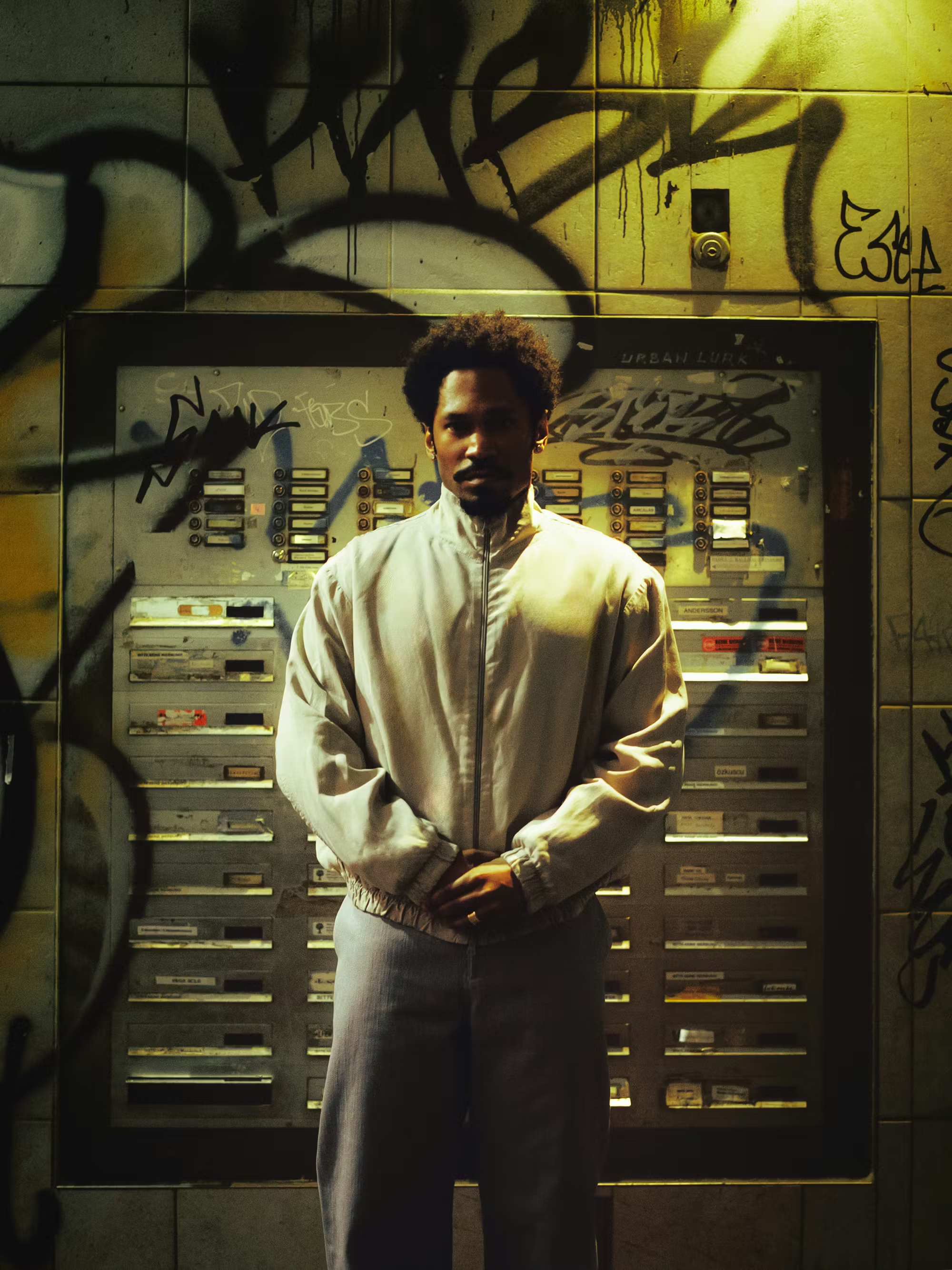
Jacket GABRIELA COLL GARMENTS Pants RIER Earrings TALENT’S OWN Ring BVLGARI
By the time the initial COVID lockdowns lifted, though, things had changed. For one, the industry writ large returned to an in-person session model; for another, Kaytranada had hit a new stratum of fame and was finding himself in studios with artists whose work he grew up studying. The move to LA in 2021 made some of the logistics easier, but it also took him far out of his comfort zone. When he recounts these stories, you can see his shoulders tense, the stress of interference still weighing on him.
The idea of going through the entire creative process with another artist — or, worse, A&Rs and executives — lingering behind him made him freeze up. (Later on in that rented home in the Hills, we talk about the story, famous in producer circles, of 9th Wonder being flown to New York while Jay-Z was recording The Black Album, given an R. Kelly sample, and told to flip it on the spot.) The Quebec cocoon was gone.
And then, during a session with the Angeleno soul singer Georgia Anne Muldrow, an epiphany. “We were just vibing, going through these beats,” Kaytranada explains. “I was very shy to make beats in person, too shy to express myself. I was used to people doing their own thing.” Muldrow clocked this, and wasn’t having it. “She was like, ‘Come on, Mr. Producer, whatcha gonna do, Mr. Producer? Whatcha gonna do?’ And then that fucked me up in a way! It was like, damn, this shit is serious. I had to be more serious than that.”
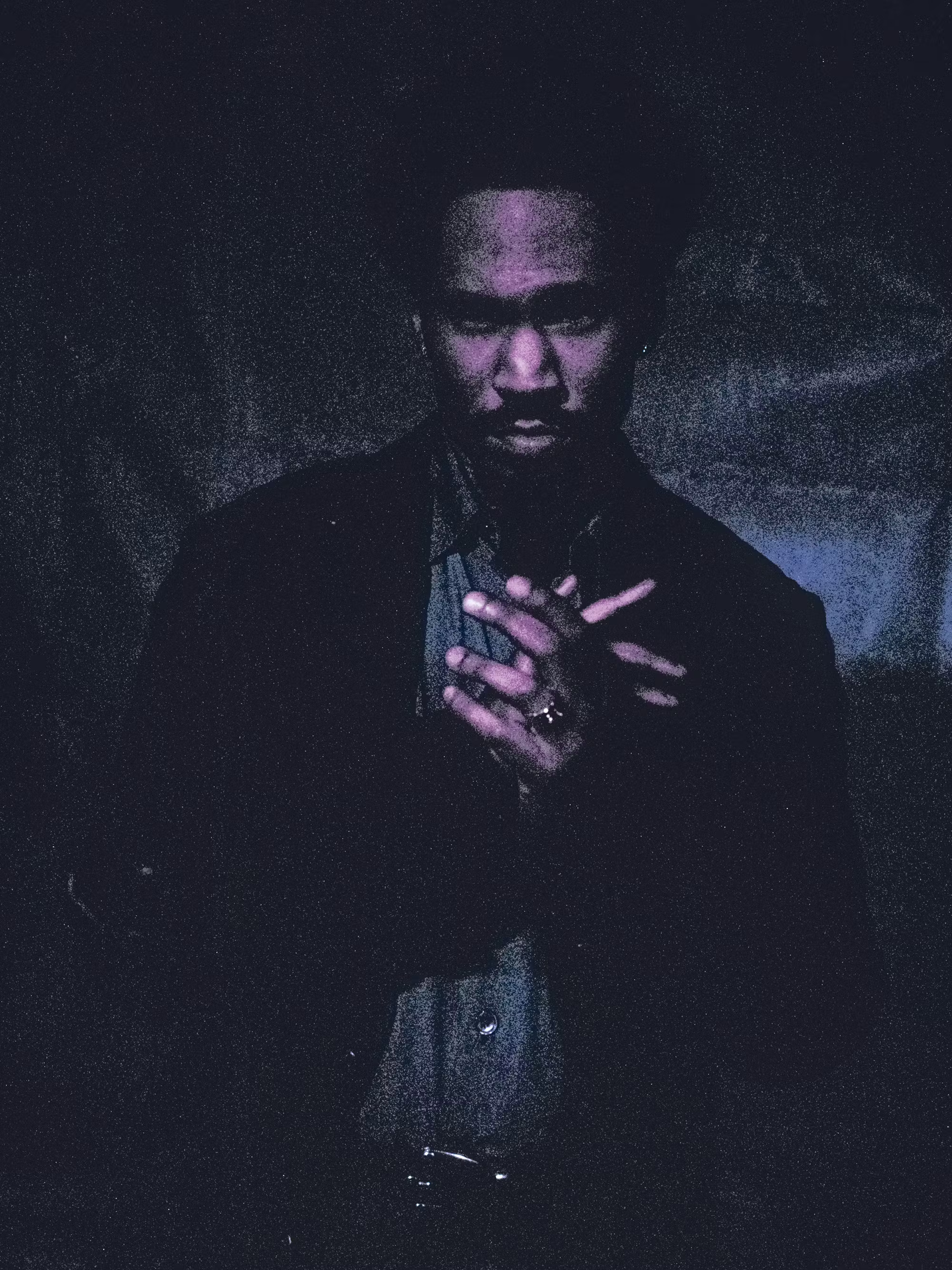
Top, shirt, and jacket OUR LEGACY Belt MOLEBO Ring BVLGARI
“I’m very shy, too,” Muldrow says. “It’s the shy ones who get a chance to know their surroundings more and understand the human condition; we take the extra time to take it all in before engaging. That’s gold in translation for being a producer. And so seeing that type of quality in Kaytranada, I just loved to encourage him. It’s the very same shyness that is the source of his versatility in style and groove.
“Really, he’s a sponge. That’s the only reason I kept” prodding him, she adds. “I wanted him to assert what he observed in real time, and make it fun.”
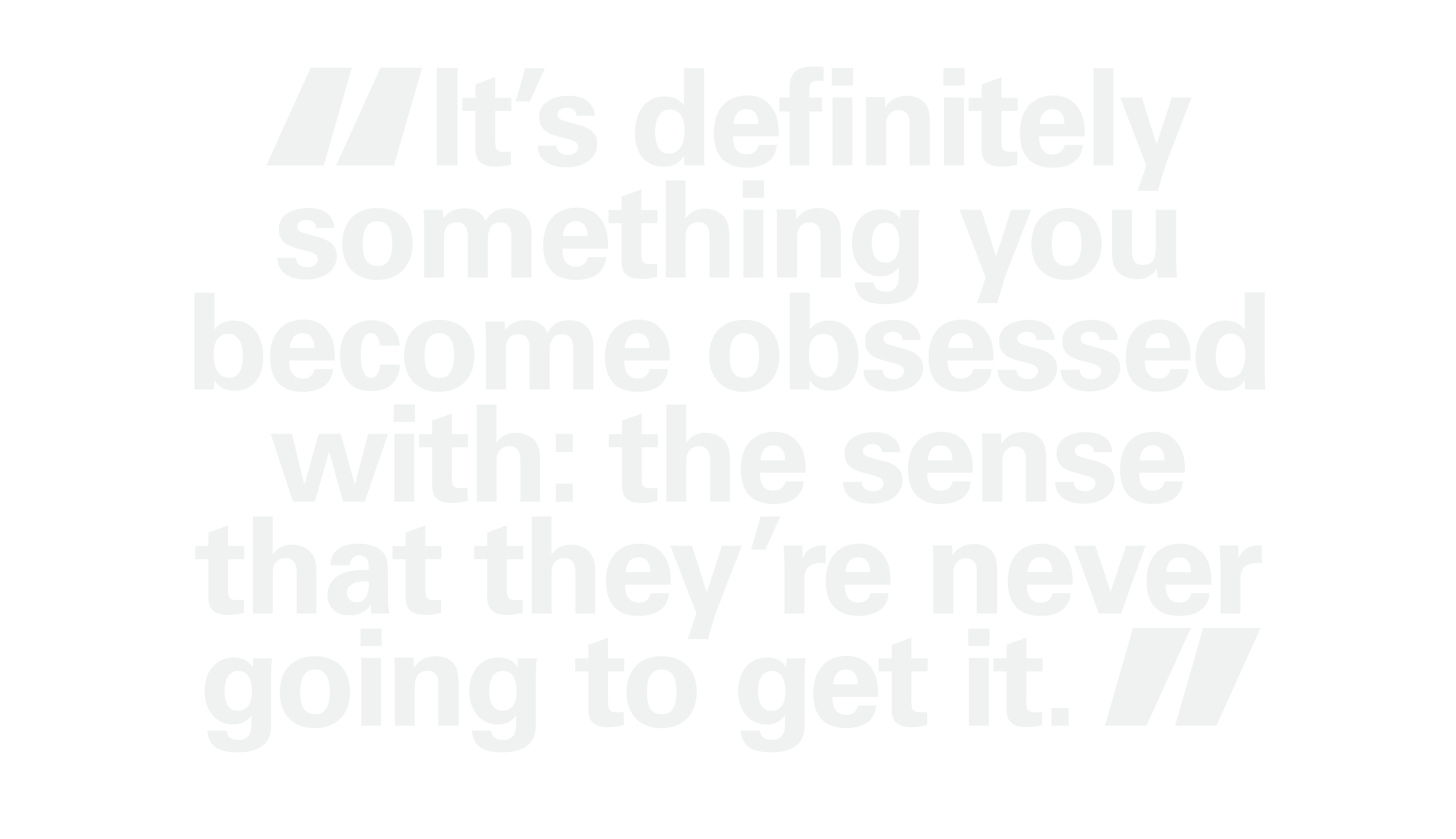
The encouragement set Kaytranada off in the right direction. But it’s one thing to literally make beats in front of an audience. It’s another still to assert your style and sensibility. “It’s definitely something you become obsessed with,” he says, “the sense that they’re never going to get it.” He describes the pressure he felt, early in his career, to “turn the swing down sometimes” — to make beats more pop than R&B if he imagined that’s what an artist wanted, a deflating process made all the more frustrating by being self-enforced. This only abated when he realized there would be no pleasing everyone, no matter how far out of his preferred pocket he went.
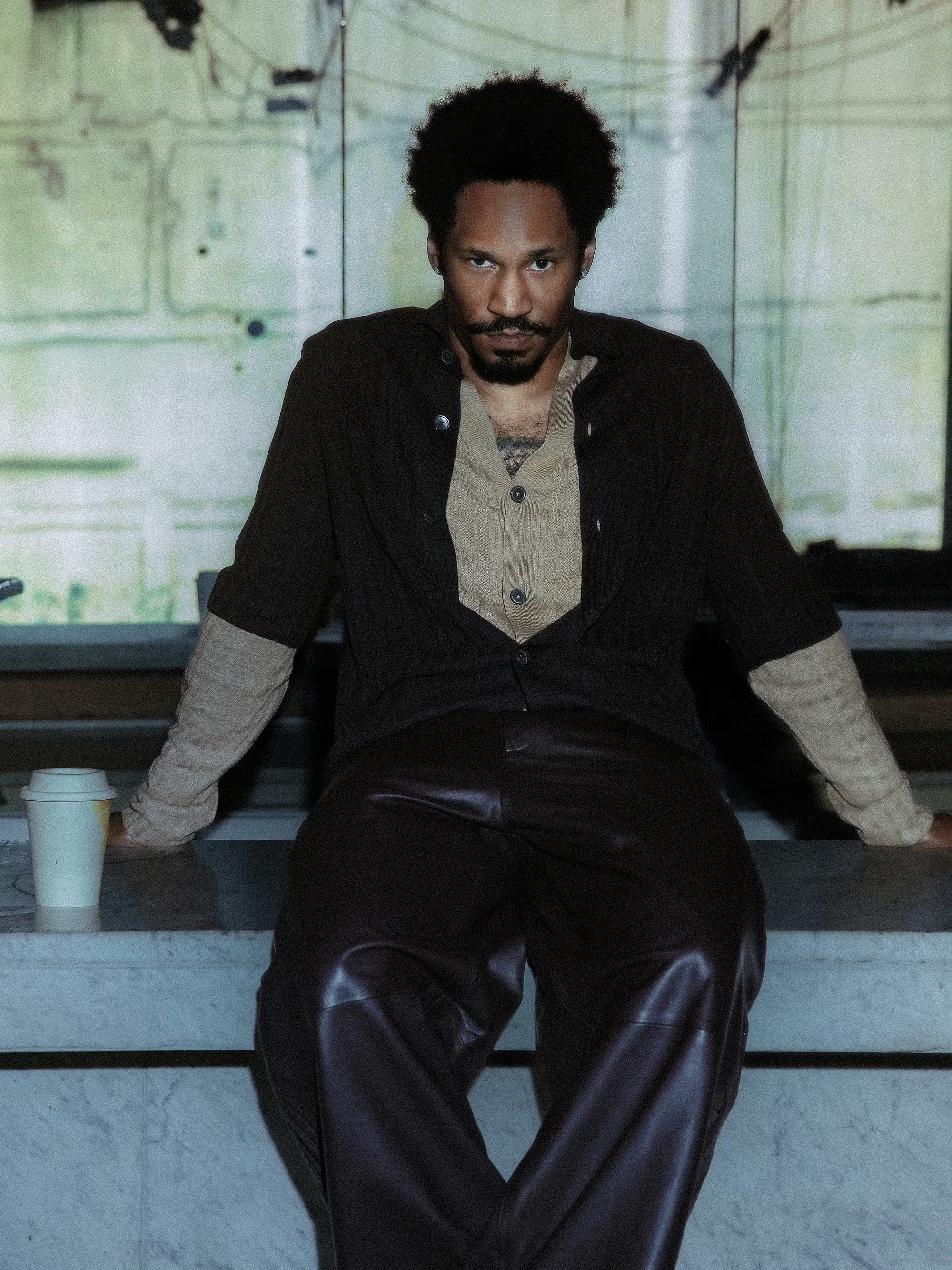
Top, sweater, and pants HERMÈS Ring BVLGARI
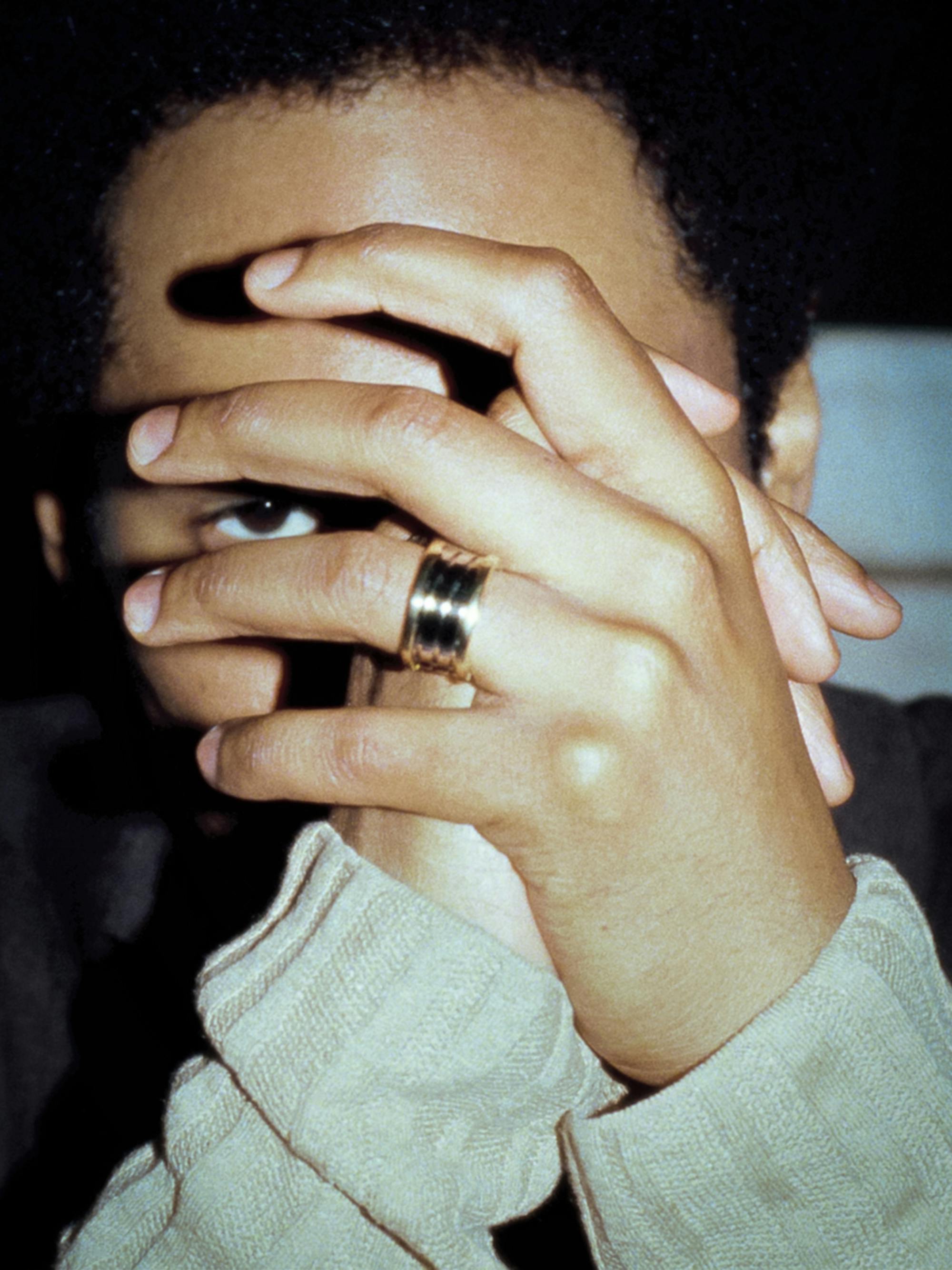
Top and sweater HERMÈS Ring BVLGARI
“Of course some people are not going to get it,” he says of his current mind state. “But it’s still what I want to express. It’s still coming from the heart. It’s still 100 percent me.”
This reserved streak is noted even by rap’s most elusive living artist. “When I met him, it seemed to me that he was a man of few words,” says Mach-Hommy, the acclaimed rapper whose face is always masked and whose name has never been revealed. “After a few months of working remotely on a little house music album, K slowly began to communicate in more and more detail. He eventually shared his origin story with me, what it was like growing up in Quebec... He told me how electronic music was never his real aim, and how his real passion lay in the creation of dark and moody sample-driven hip-hop. Montreal shit, as he so succinctly put it. I think he described his success in the electronic music scene as a ‘happy accident.’”


The pair’s first collaboration, a single from Kaytranada’s 2021 EP, Intimidated, was a nod to their shared heritage. “$payforhaiti,” part of the proceeds of which benefitted Mach’s Pray for Haiti Trust Fund, is a bright, skittering cut delivered partially in Creole; “#RICHAXXHAITIAN,” from Mach’s album of the same name, feels even closer to how that nascent house LP might sound. “Two Haitians in a post-apocalyptic Tinsel Town,” Mach says of their chemistry. “What could go wrong?”
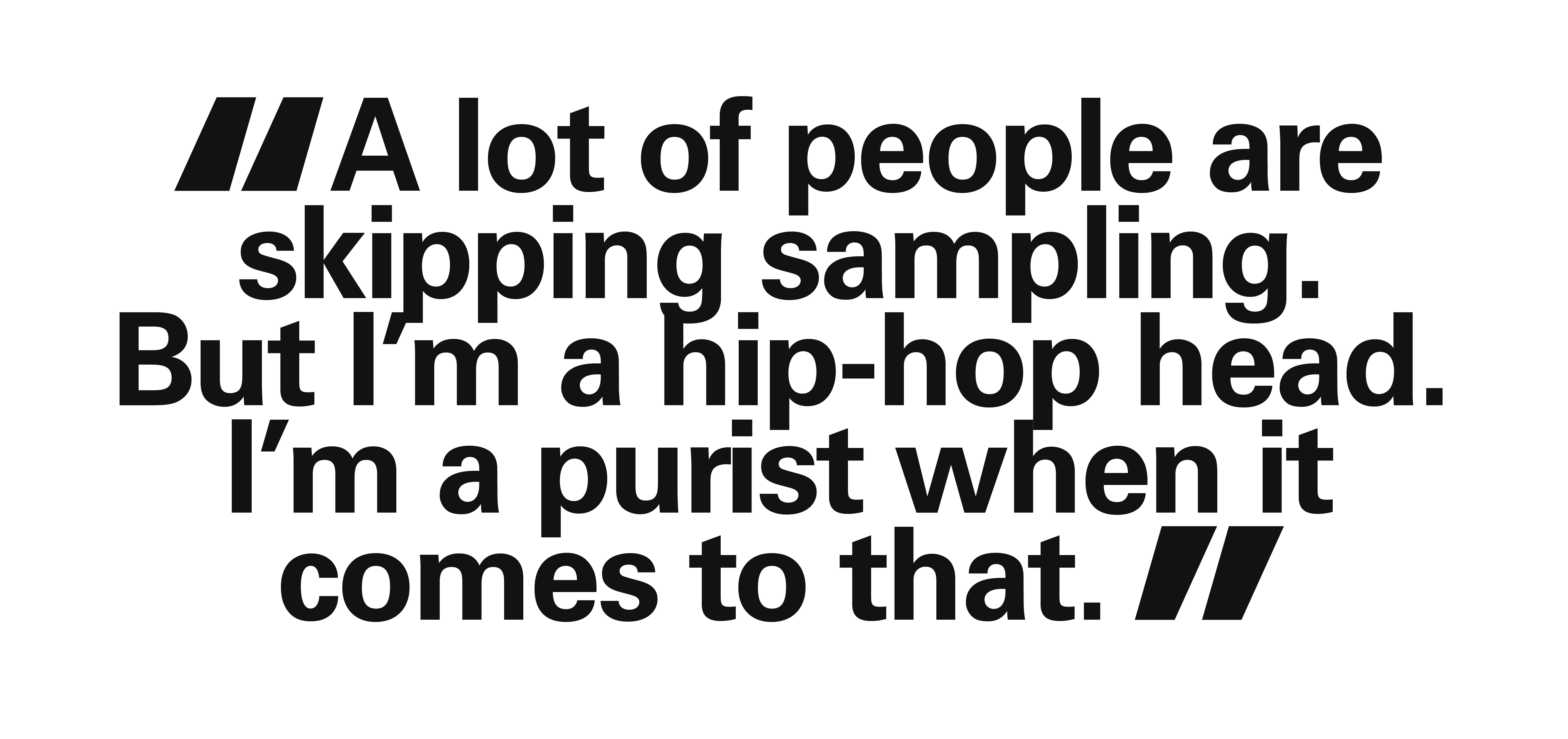
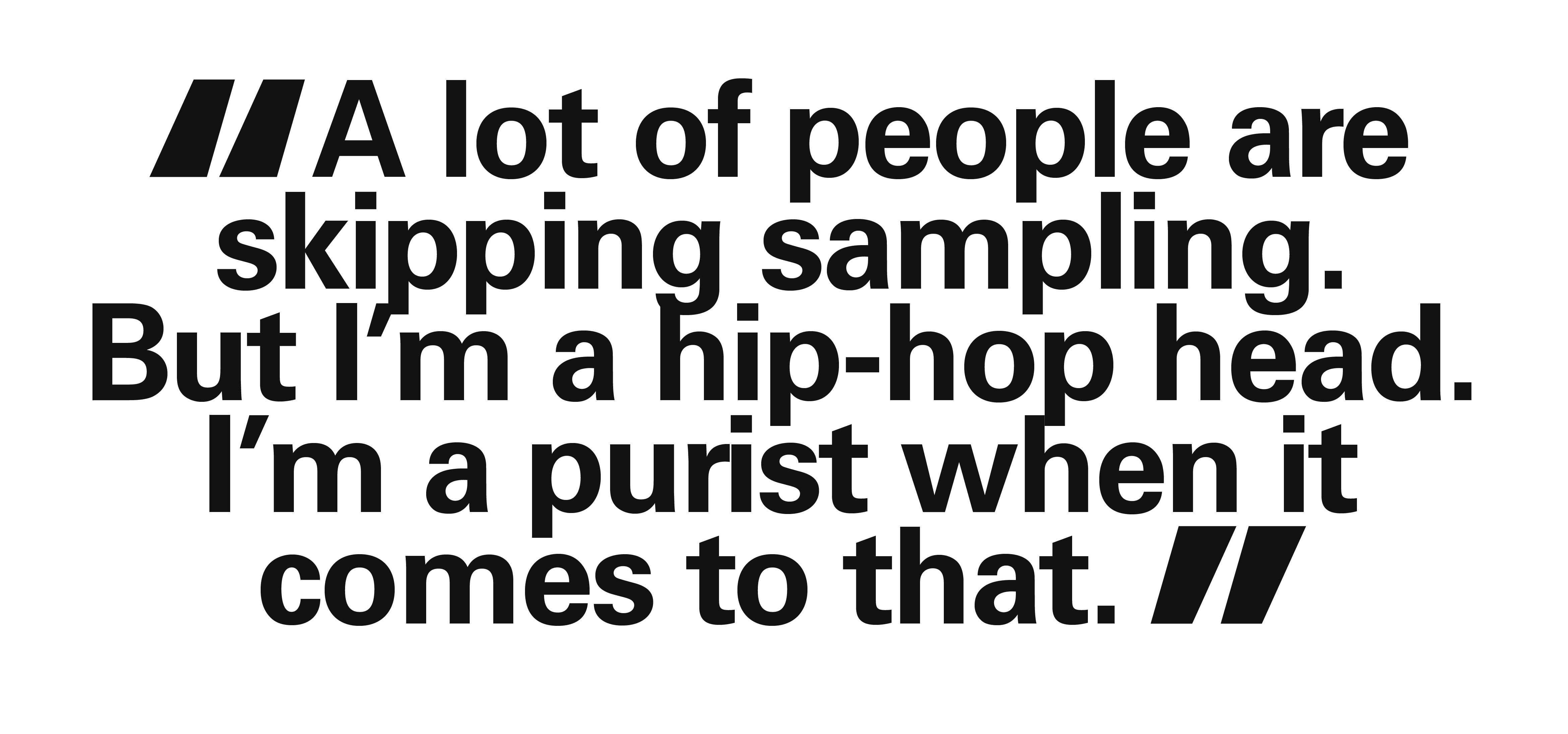
When Kaytranada was a teenager, he paid close attention to the battle between Lupe Fiasco and Atlantic Records over what would become the Chicago rapper’s third album, Lasers. It was a catalyzing event for Kaytranada, who decided to make whatever contractual concessions were necessary to retain creative control over his career. It’s something he’s demanded in all his recording contracts — and extends to his attitude about sampling. “A lot of people are skipping sampling; they just don’t want to go through the bullshit and the lawsuits, or even [calling rights holders],” he says. “But I’m a hip-hop head. I’m a purist when it comes to that.”
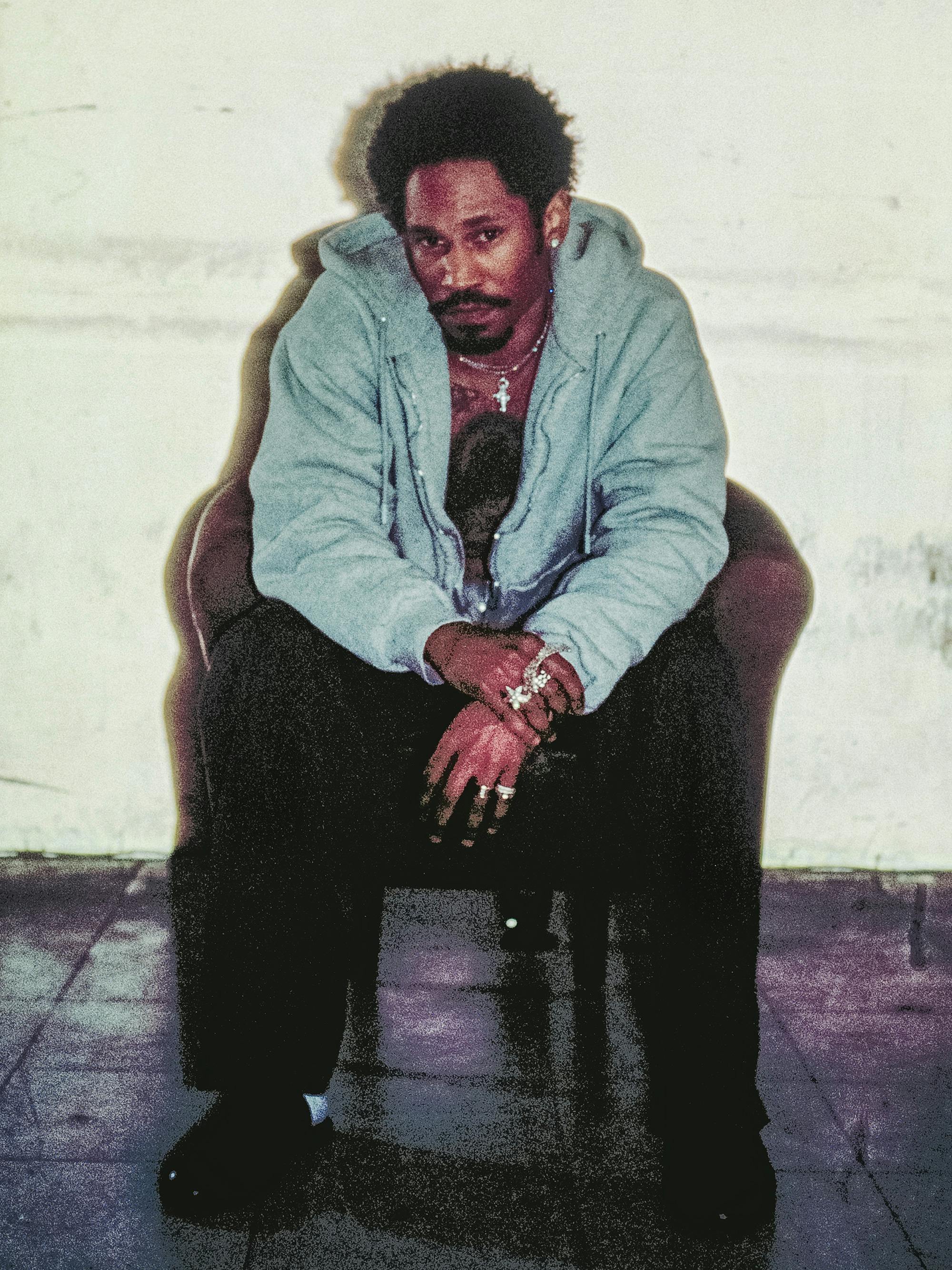
Hoodie ACNE STUDIOS Pants OUR LEGACY Shoes JIL SANDER Ring (left hand ring finger) BVLGARI Rings (left pinky and right hand) and necklace, KAYTRANADA’S OWN
And yet any career that includes a string of arena dates across Europe, as Kaytranada’s will this summer, suggests an enterprise so big it would be difficult for one person to steer. There are trucks to take monitors and pieces of a stage from Berlin to Warsaw (and to Zurich, then Munich…) and an unending string of interchangeable hotel rooms where Kaytranada will take his production equipment but, he anticipates, rarely touch it. When he tours, he says, “all my creativity is just poured into when I perform.” There will be tens of thousands of fans dancing every night, tracking the minute changes he likes to make to the studio versions of his songs. He says the sheer scale will never stop being a little surreal.
Still, Kaytranada knows that sometimes the best thing you can do is wait. So for now, he’s biding his time, working on beats from the couch — some presumably the krump mutations he teased — while movies play quietly in the background.
He works most nights between 10 p.m. and 3 a.m. Otherwise, he’s rediscovering things that never got their moment. “I was always a fan of Raphael Saadiq,” he says, “but I never really listened to his second record,” 2004’s G funk-inflected Ray Ray. “Now, it’s one of my favorite albums.” Back then, he shrugs, it just wasn’t the time. And so until the perfect moment, Kaytranada will be here: tinkering, listening, conjuring something unlike anything that came before.
Credits
By: Paul Thompson
Seamstress: Osamu Arai
Photographed by: Nadine Fraczkowski
Hair & Makeup: Adiam Habtezion
Styled by: Von Ford
Photography Assistant: Franziskus Dornhege
Styling Assistant: Zakiya Jessie Zazaboi
Hair & Makeup Assistant: Isabel Maria Simoneth
Production Assistant: Hugh Kwofie
Casting & Talent Manager: Dasia Schowengerdt